AMCIL takes advantage of market volatility to add to positions in quality companies
Quick read:
Net profit up 3.6% on the prior year, with the payment of a 0.5c special dividend
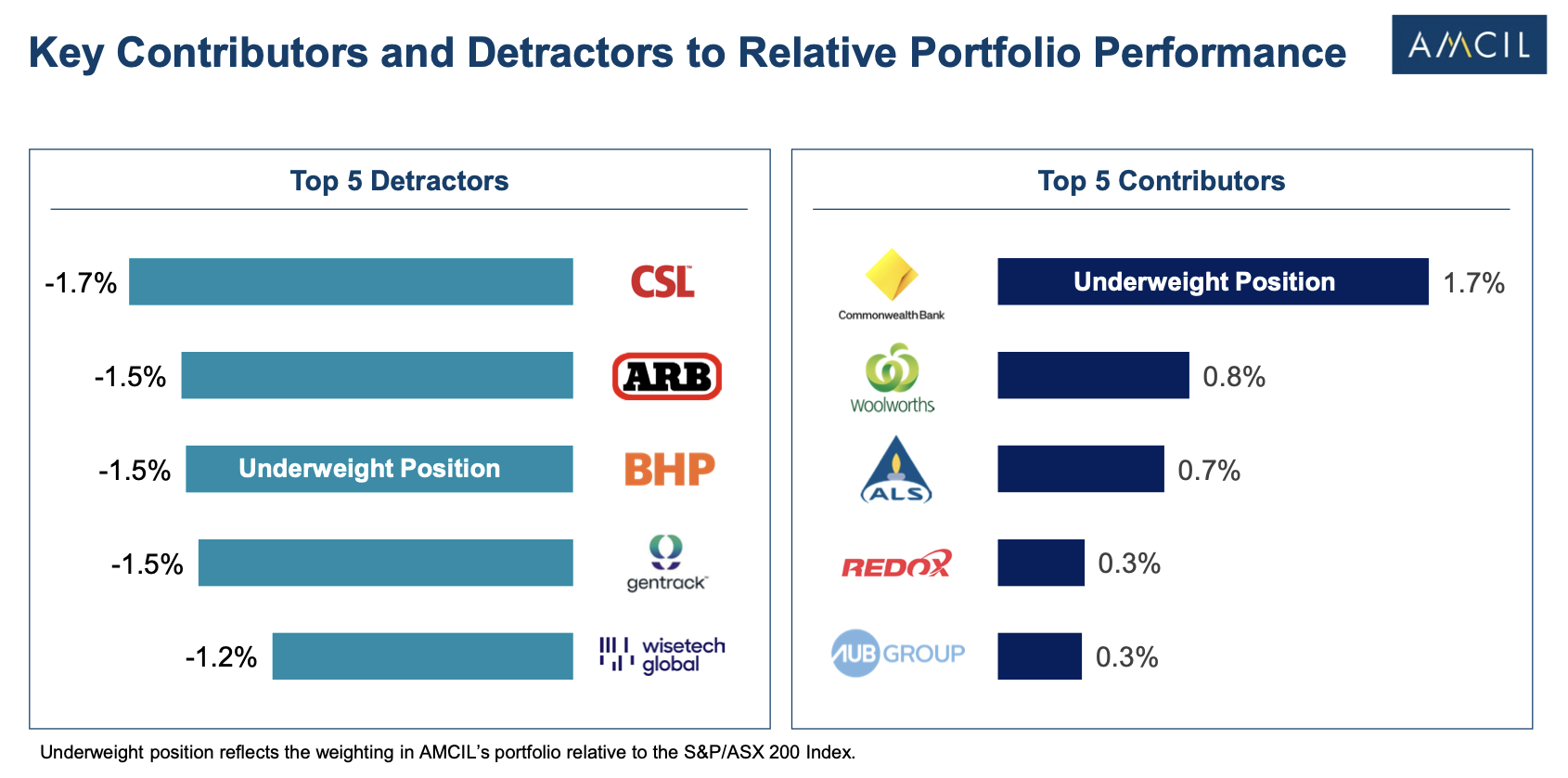
Sharp divergence across sectors defined the year, with Materials up 52%, while Healthcare and Information Technology fell 36% and 37%, respectively
Portfolio return for the FY26 periods was -10% compared with 7.2% for the S&P/ASX 200 Accumulation Index, including franking
Volatility was used to add to quality names trading at discounted valuations, funded by trimming holdings where valuations had run ahead of fundamentals or where our conviction in a company had changed
Healthy cash position maintained heading into reporting season
AMCIL reported an increase in net profit to $6.9m, up 3.6% from FY25, and declared a special dividend following a financial year marked by a wide divergence in returns across sectors.
Newly appointed Portfolio Manager, Winston Chong, said the defining feature of the market over the period was the gap between the best and worst performing ASX sectors. Materials rose 52% and energy 15%, while healthcare fell 36% and IT 37%.
While high conviction and concentrated in nature, the Company seeks to construct a portfolio that is diversified across sectors. While positions in underperforming stocks and sectors weighed on returns during the period, the AMCIL investment team continues to look for opportunities to apply its investment thesis in periods of market volatility.
Portfolio activity
Market volatility in FY26 gave AMCIL the opportunity to be active in managing the portfolio. In its assessment of quality, Chong says the test applied to each portfolio transaction is straightforward.
"What we're looking for is companies where the earnings have remained broadly intact, but are trading at discounted valuations due to temporary or short-term issues that we think will not persist into the future," he said.
Most of that activity was in technology, where a number of stocks de-rated significantly even though earnings held up. AMCIL added to existing positions in SEEK, Car Group and Technology One.
Events offshore created further opportunities. Conflict in the Middle East prompted short-term concern around airline capacity, allowing AMCIL to add to its position in Auckland International Airport, which it considers a tier-one infrastructure asset.
Separately, when fluctuating oil prices declined on prospects of a resolution to the Middle East conflict, the portfolio added to Woodside, which Chong described as holding globally strong cash-generating assets that perform through the cycle at lower oil prices.
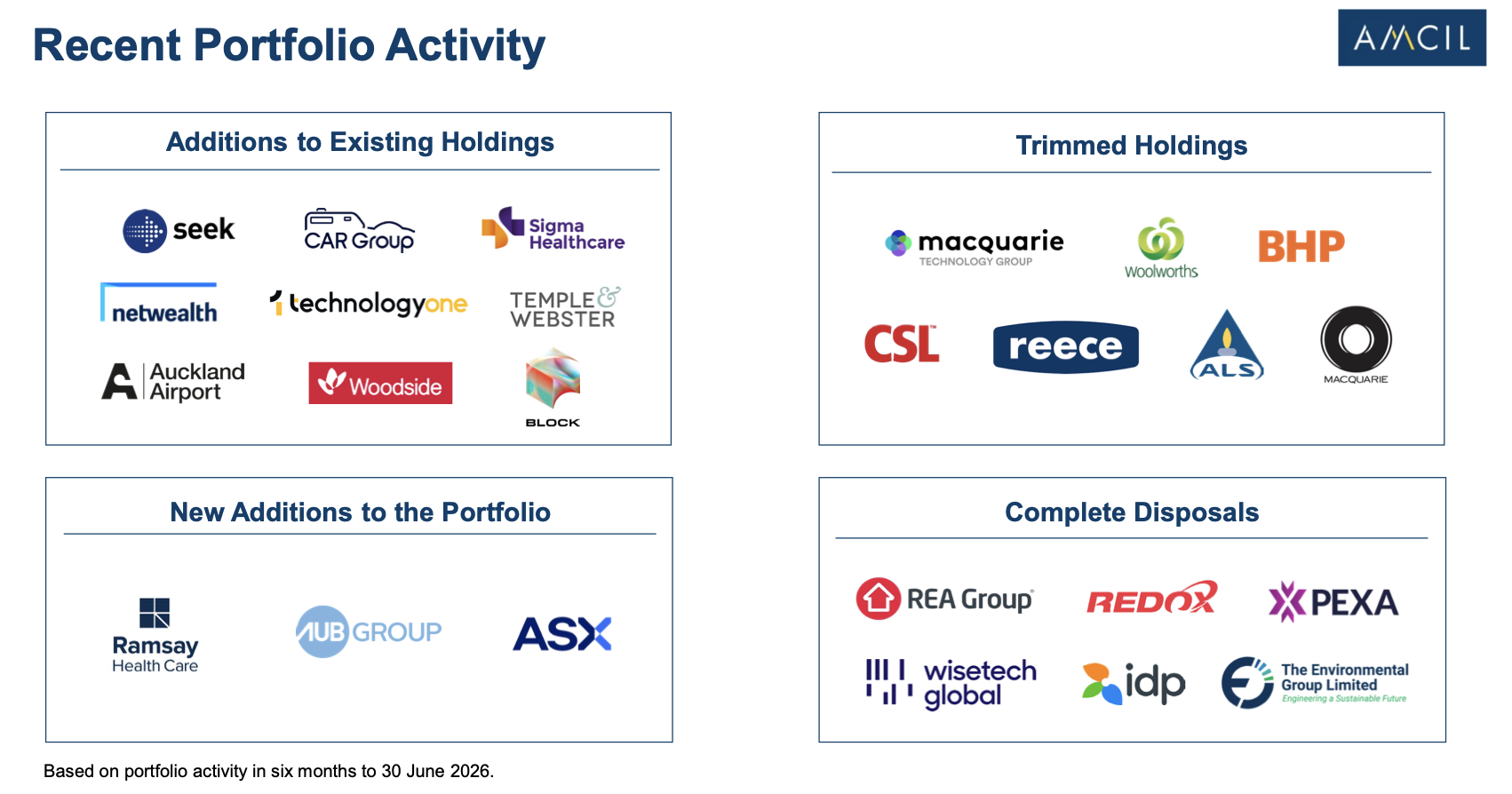
Those purchases were partly funded by trimming holdings where valuations had moved ahead of fundamentals, including Macquarie Technology Group, Macquarie Group, Woolworths and ALS.
"We still retain positions in those companies. We like the management teams and the quality of those companies, but have just reduced the position to reflect where valuations have gotten to," Chong said.
AMCIL also exited a number of smaller positions where conviction had been waning, redeploying the proceeds into opportunities expected to drive better relative shareholder returns.
Looking ahead
While Winston was clear that AMCIL is a long-term investor and does not make six to 12 month forecasts, he offered several observations on current conditions.
Heading into FY27, he said some of the FY26 headwinds for the broader portfolio have begun to turn. Resources companies have come off their peaks as commodity prices have declined, while Healthcare has bounced from its lows given where valuations had fallen to. Looking ahead, the technology holdings retained in the portfolio also carry strong earnings prospects.
On that basis, Chong said the portfolio is appropriately positioned for the current environment, with the team continuing to review and refine its construction.
AMCIL also enters reporting season with a healthy level of cash.
"We're expecting continued volatility and opportunities to do what we've been doing, which is to take advantage of short-term price dislocations to increase our exposure to high-quality companies," Chong concluded.